
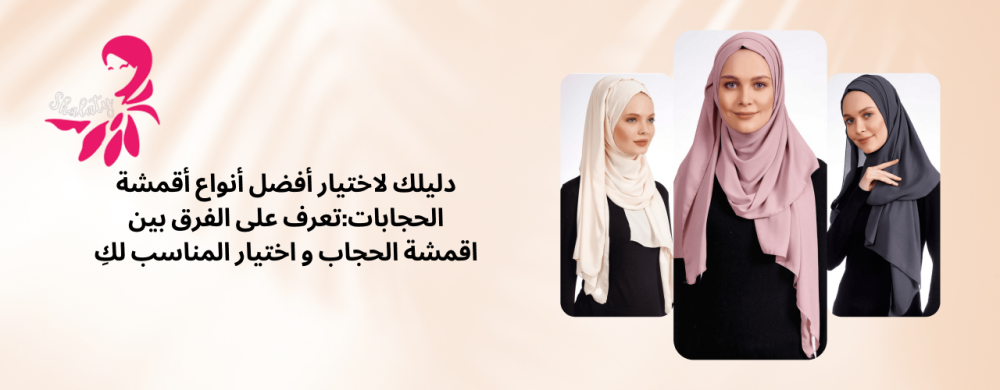
When you open your hijab wardrobe, you're not just choosing a color; you're selecting a fabric that speaks to your skin and complements your day, no matter the weather. Fabrics are a silent secret in every woman's life; we might not pay attention to them when we're quickly buying a hijab, but they're the first thing that touches our heads and the last thing we take off before bed. From comfortable cotton to lightweight chiffon and silk that drapes like a soft whisper, the subtle details that make all the difference between a hijab that accompanies you confidently and one that bothers you all day long vary. In this guide, we'll explore the different types of hijab fabrics as presented by Shalati: discovering the texture of each material, how to choose what suits you best, and how to care for it to keep it looking elegant for longer.
Choosing a hijab is not just about the shape, but it starts with the fabric that respects your time and comfort and suits your simple beauty.
What is the hijab? And what are its types?
The hijab is not merely a piece of cloth to conceal the hair; it is a garment that preserves a woman's presence and grants her a privacy befitting her wherever she goes. It is a small detail to the eye, yet profound in the heart, worn each morning to tell the world that elegance can also be modest.
The types of hijab fabrics vary to suit every woman's taste and daily needs, including:
- Cotton: Practical, soft, and ideal for everyday use.
- Chiffon: Light and gives a soft and attractive look on mild days.
- Crepe: Stable and comfortable for those looking for a hijab that won't slip.
- Silk: delicate and elegant, ideal for special occasions and requires special care.
When you hold onto your hijab, you are choosing a texture that suits you and accompanies you with confidence and comfort.
The best types of hijab fabrics
Among the many fabrics, some materials stand out as the top choices carefully offered by Shalati. Cotton , for example, remains a smart choice for everyday comfort; it is light, breathable, and easy to wash. Chiffon suits both casual and formal looks, while crepe provides a stable frame that stays in place no matter how long the day. Silk , however, is a story in itself: its cool texture and softness make it perfect for special occasions, but it does require some care to maintain its beauty.
At Shalati, you will find a selection of high-end fabrics from different schools:
- Kuwaiti fabrics are known for their durability and practical materials suitable for everyday use.

- Turkish fabrics are famous for their flowing and soft touch, which gives the hijab a neat appearance.

Egyptian fabrics combine durability and ease of care, making them suitable for changing weather conditions. All these options are accompanied by clear images, allowing you to confidently choose what best suits your taste.
How to coordinate hijab fabric with clothing
A beautiful hijab can lose its appeal if it doesn't coordinate with your entire outfit. To achieve the best harmony:
- Choose a hijab fabric that matches the fabric of your dress or abaya.
- Soft fabrics like silk need calm, uniform-colored clothing to highlight their elegance.
- Chiffon or cotton can be easily coordinated with patterns and embellishments without the look appearing cluttered.
- Consider your skin tone: warm shades like beige and bronze suit wheatish skin tones, while pastel shades and light gray brighten fair skin.
- The golden rule: Try in front of the mirror, try on more than one option, and give yourself the freedom to experiment until you find the perfect match.
The best summer fabrics suitable for hijab
Summer is a true test of comfort. Under the sun, you need fabrics that allow your hair roots to breathe and protect you from sweat and moisture. Lightweight cotton and soft linen top the list of the most suitable hijab fabrics for summer. They are highly absorbent and help reduce the feeling of heat. Chiffon can also be a good choice on milder days, as it gives you an elegant look without clinging to your neck or head. Just remember to secure it well so it doesn't slip due to perspiration or constant movement.
Ways to care for the hijab according to the type of fabric
Each fabric has a specific care method to keep it looking new for the longest possible time:
- Cotton: It can withstand frequent washing, but it is preferable to avoid exposing it to direct sunlight so that it does not lose its color.
- Chiffon: sensitive to high heat; hand wash in lukewarm water and dry in the shade.
- Silk: Wash it gently with a mild detergent and store it folded softly without pressure.
By following these steps, you will preserve the softness of your hijab fabrics and prolong their lifespan, because they are not just a piece of fabric, but a part of your elegance and comfort.
The story of color: When do you choose dark colors? And when do you let the light filter in?
Choosing the best hijab fabrics isn't enough if you don't pay attention to color. Black and dark colors convey a sense of seriousness and formality, but they can sometimes make your head feel hotter under the harsh sun. White and light colors alleviate this feeling, but they might need an extra layer underneath to prevent transparency. Here, the fabric's texture plays a subtle role: light chiffon in a beige color differs from light silk in how it blocks light. Therefore, when you're looking at colors in the store, ask about the fabric's density, try it on in the light if possible, and make sure it performs well outdoors, not just in the mirror.
How do I choose the right type of fabric for me?
This is a question many people ask in conversations with saleswomen: How do I choose the right type of fabric for me? The answer begins with knowing yourself.
- If your hair is very thin and fine, stay away from slippery fabrics such as thin chiffon or very fine silk, and try cotton or crepe.
- If you are very active, you need a breathable fabric that does not stick to the neck.
- If you like to wrap your hijab in the turban style, flexible fabrics that hold their shape, such as cotton mixed with elastane, will give you the best result.
The best answer is to try it on: feel it, tie it, measure the fabric length against your neck, and don't rush into buying just because it looks pretty. Quality starts with the touch.
How do I know what kind of fabric is good?
Fabrics may look similar under lighting, but they are different when they touch your skin or go in the washing machine. Good fabric has telltale signs:
- The threads are tightly woven and do not unravel easily at the ends.
- Its texture is smooth without any rough, itchy hairs.
- It retains its color after repeated washings.
- It hangs steadily on the head without the need for constant adjustment.
When you're looking at different types of hijab fabrics , take a small piece and gently rub it between your fingers. You'll immediately notice the difference between a hijab that will last you for years and one that disappoints after a couple of washes.
A fabric that tells your story
You might not notice, as you put on your hijab, how all your details seep into its folds. The scent of your favorite perfume, the touch of incense before going out, the story of old fabrics you inherited or bought on a long trip. Every piece of hijab fabric is a small memory added to the archives of your life like pages from a notebook.
Always choose what suits you, what touches you gently, what speaks volumes when you're silent. Choose my shawls . At my shawls, we understand that every woman carries a story behind her hijab. That's why we choose fabrics as carefully as we choose words: authentic, warm, and effortlessly elegant. Try, choose, and experience your style in tangible details... because the hijab is not just a piece of fabric, but the beginning of a story.
Frequently Asked Questions
What is the difference between a cotton hijab and a chiffon hijab?
Cotton is more durable and comfortable for everyday use, while chiffon is light and elegant but may slip more.
Is crepe suitable for everyday hijab?
Yes, crepe is stable, easy to install, and gives a neat look all day long.
How do I fix a slippery hijab?
Use a cotton bandana underneath and invisible safety pins.
Is silk suitable for everyday wear?
It is preferred for visits and events rather than for regular use because it requires care and is not easily fixed.
Is a linen hijab practical?
Linen is light and porous, but it can wrinkle quickly and requires frequent ironing.
What is the best hijab fabric for winter?
Relatively heavy fabrics such as viscose or thick cotton keep the head warm.
Is there a non-slip hijab?
Cotton hijab mixed with elastane or crepe gives high stability.
How can I preserve the color of my hijab after washing?
Wash it with cold water and dry it in the shade, away from direct sunlight.
How many headscarves is it appropriate to own?
It is preferable to have 5 to 10 different headscarves in different colors and materials to cover all occasions.
What is the best hijab color for dark skin?
Warm colors such as bronze, dark beige, and olive suit dark skin.